Commercial Mold Remediation for Offices, Warehouses, and Large Businesses
 Jul 16, 2026
 What should you know first?
Learn what causes commercial mold, when professional remediation is needed, how containment protects operations, and how Michigan facility teams can respond.
Commercial mold remediation is a controlled process for correcting the moisture source, containing affected areas, removing materials that cannot be cleaned, and verifying that the work area is ready for normal use. Large offices, warehouses, healthcare properties, schools, multifamily buildings, and industrial facilities need a plan that also protects occupants and business continuity.
Miracle Property Restoration provides mold remediation in Michigan for commercial and residential properties across Fraser, Macomb County, and Southeast Michigan. A qualified response begins with conditions at the property, not a generic treatment or an unsupported promise that a building is “mold free.”
What causes commercial mold growth in office buildings?
Commercial mold growth begins when moisture remains on or inside a material long enough to support growth. Common office sources include roof and plumbing leaks, wet ceiling tiles, condensate drain problems, high indoor humidity, cold-surface condensation, exterior wall intrusion, and water that has traveled under flooring or into wall cavities.
Facility teams should look beyond the visible spot. A stain near a window may originate at flashing or the building envelope. A musty area near an air handler may involve drainage, insulation, or humidity control. The EPA mold guidance emphasizes moisture control because cleaning visible growth without correcting the water source allows the condition to return.
What are the health risks of workplace mold exposure?
Mold can irritate the eyes, skin, nose, throat, and lungs, and exposure can affect people differently. The CDC mold guidance explains that people with allergies, asthma, immune suppression, or chronic lung disease may be more sensitive. A restoration contractor should not diagnose medical conditions. Employees with symptoms should speak with a healthcare professional, while management addresses the building condition.
Employers should also consider communication, access control, and worker protection. The OSHA indoor air quality guidance provides a useful starting point for workplace responsibilities. For a large or occupied building, coordinate the remediation plan with facility management, environmental consultants, and safety personnel as the circumstances require.
Professional mold removal or DIY cleaning for a warehouse
Professional assessment is appropriate when growth covers a large area, returns after cleaning, involves porous materials, may have spread through HVAC or concealed assemblies, follows contaminated water, or affects occupied work areas and stored products. A small surface spot caused by a corrected, isolated moisture event is different from widespread warehouse growth.
Warehouses introduce scale and operational risks that consumer cleaning advice does not address:
- High ceilings, racks, and large slabs can hide the full moisture path.
- Air movement from dock doors and mechanical systems can carry dust beyond the work area.
- Cardboard, wood pallets, insulation, and stored goods can be porous and difficult to clean.
- Forklift traffic and active operations can compromise containment.
- Product, employee, tenant, and regulatory requirements may require independent documentation.
Do not disturb a large affected area simply to see how far it extends. Limit access, protect unaffected inventory when it is safe to do so, correct active water, and arrange a professional assessment.
How professional commercial mold remediation works
A property-specific project generally includes these stages:
- Assessment and moisture investigation. Document visible conditions, measure moisture, identify the likely source, and define areas needing further evaluation.
- Operational planning. Coordinate access, occupant communication, critical equipment, work hours, and any independent testing requirements.
- Containment and controls. Isolate the work zone and use pressure and filtration controls suited to the scope.
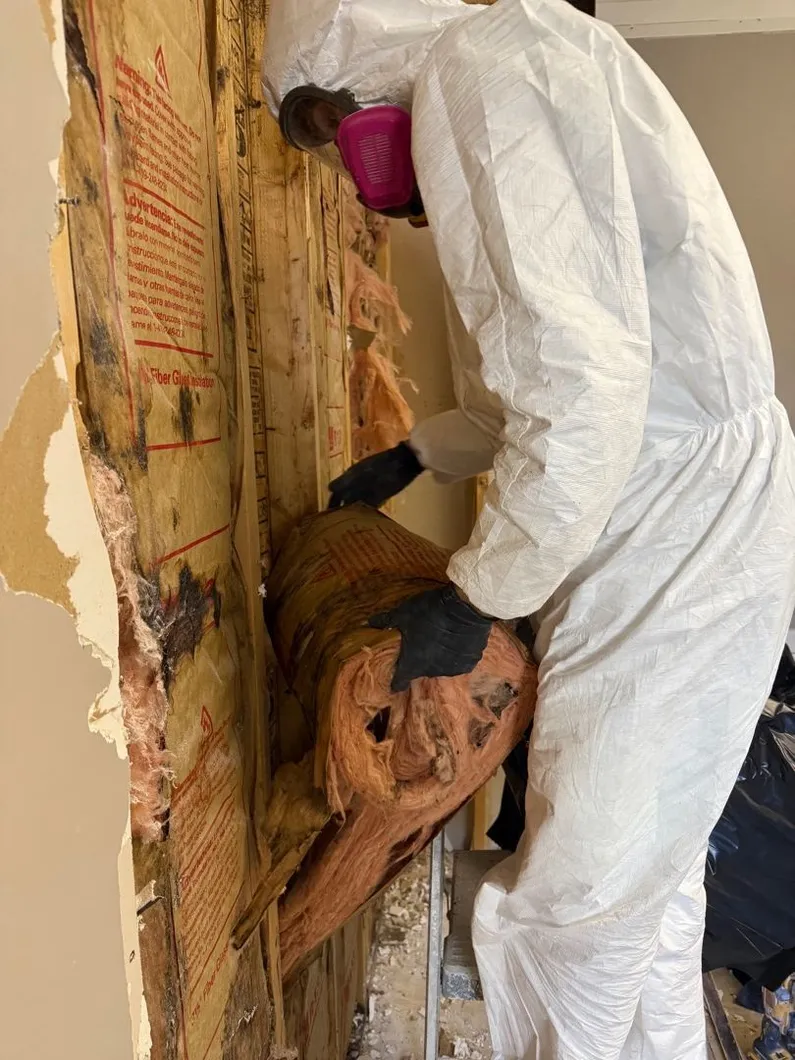
- Removal and cleaning. Remove unsalvageable porous materials and clean remaining surfaces using methods appropriate for the material and condition.
- Drying and source correction. Confirm that the leak, condensation, humidity, or drainage problem is corrected and affected assemblies are dry.
- Verification and reconstruction. Complete required clearance or post-remediation evaluation, document the work, and rebuild removed finishes after acceptance.
Testing is not a substitute for fixing moisture. It may be useful when the source is uncertain, occupants have specific concerns, litigation or regulation is involved, or an independent consultant has defined clearance criteria.
How to compare mold remediation services for a large business
The best provider for a facility is the one that can substantiate its scope, controls, documentation, and ability to work around the property. Ask each candidate to explain:
- How the moisture source and hidden spread will be investigated
- Who defines the remediation scope and whether independent testing is recommended
- How containment, filtration, worker protection, and waste movement will be managed
- How occupied areas, tenants, products, and critical operations will be protected
- What readings, photographs, daily records, and completion documents will be supplied
- How reconstruction and insurance communication will be coordinated
Avoid selecting on a self-proclaimed “top rated” label alone. Verify current credentials, insurance, relevant project experience, references, and the proposed plan. Miracle Property Restoration can assess commercial mold conditions and develop a scope for Southeast Michigan facilities. Call (855) 324-2921 for 24/7 help.
Frequently asked questions about commercial mold remediation
Can an office stay open during mold remediation?
Sometimes. The decision depends on affected area, containment, access routes, HVAC configuration, occupant sensitivity, noise, and the work being performed. A phased project may preserve unaffected operations, but people should not occupy an unsafe work zone. The project team should document restrictions and communicate changes to building management.
Does bleach solve commercial mold growth?
Bleach is not a complete remediation plan. The moisture source must be corrected, affected porous materials may require removal, and the work area may need containment and filtered air control. Product choice depends on the surface and scope. Large, recurring, hidden, or workplace conditions should be professionally assessed before disturbance.
How quickly should a business respond to suspected mold?
Respond promptly by controlling active water, limiting access to the affected area, documenting visible conditions, and arranging an assessment. The appropriate urgency depends on moisture, affected materials, occupants, and operations. Waiting can allow water to spread and can make the final scope more disruptive and expensive.
Frequently Asked Questions
What does this commercial mold remediation for offices, warehouses, and large businesses guide explain?
Learn what causes commercial mold, when professional remediation is needed, how containment protects operations, and how Michigan facility teams can respond.
When should a property owner contact a restoration professional?
Contact a qualified restoration professional when damage is active, hidden moisture may remain, regulated materials could be present, or the loss affects structural materials, indoor air quality, electrical systems, or normal building operations. Prompt assessment helps define safe next steps and limits avoidable secondary damage.
How does Miracle Property Restoration support a damage recovery project?
Miracle Property Restoration provides emergency stabilization, documentation, mitigation, remediation, and reconstruction for commercial and residential properties across Southeast Michigan. The team develops a property-specific scope, records conditions and progress, coordinates with project stakeholders, and restores affected areas after the immediate hazard is controlled.


