Why Immediate Water Extraction Is Critical for Commercial Properties
 Jul 13, 2026
 What should you know first?
Learn why commercial water extraction needs to begin quickly, what should happen first, and how a documented drying plan helps Michigan businesses limit downtime after water damage.
Immediate water extraction is critical for commercial properties because standing water can spread through finishes, equipment areas, and adjacent suites while the building is still trying to operate. Removing water promptly is the first step in protecting people, limiting material damage, and giving the drying plan a chance to work.
For a business owner or property manager, the goal is not simply to remove visible water. It is to stabilize the affected area, identify where moisture has traveled, document conditions for the claim, and make informed decisions about what can safely remain in service. Miracle Property Restoration provides commercial water damage restoration throughout Macomb County and Southeast Michigan.
Water keeps moving after the leak stops
Water can travel under flooring, into wall cavities, beneath baseboards, and through penetrations for utilities or plumbing. In a commercial building, it may also move between tenant spaces or reach inventory, electrical components, and lower levels before anyone sees a stain or puddle.
Extraction limits the amount of water available to migrate into those materials. It also reduces the humidity load that air movers and dehumidifiers must address later. A quick response does not guarantee that every material can be saved, but it can preserve more options and shorten the recovery path.
The first priorities after commercial water damage
Before cleanup begins, make sure the space is safe to enter. Water near electrical equipment, ceiling damage, contaminated water, and compromised walking surfaces can require immediate controls. Once the area is safe, a commercial response typically follows these priorities:
- Stop the source when possible. Shut off a failed supply line, isolate equipment, or arrange temporary protection for a roof leak.
- Protect people and critical operations. Restrict access to unsafe zones and move vulnerable inventory, records, electronics, or equipment when it can be done safely.
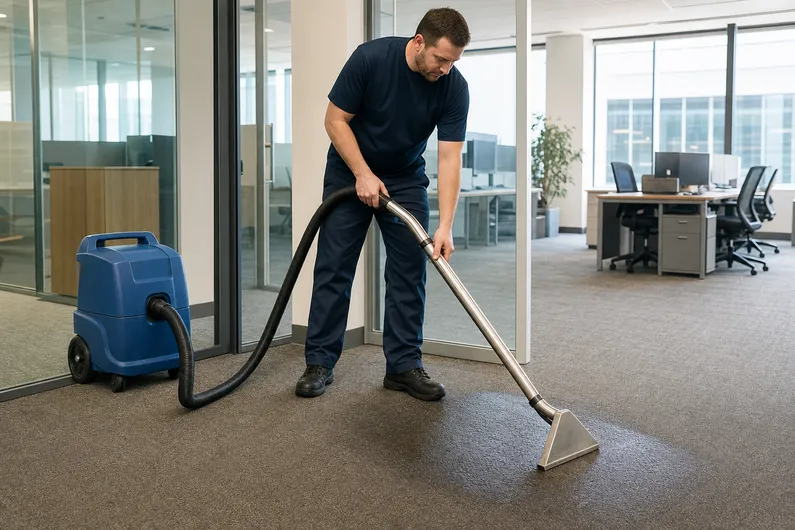
- Extract standing water. Pumps, weighted extractors, truck-mounted equipment, and specialty tools are selected based on the flooring, water volume, and access.
- Map moisture beyond the visible loss. Moisture readings and targeted inspection help identify wet materials that need drying, removal, or further investigation.
- Document the conditions. Photos, readings, affected-area notes, and equipment records create a clearer basis for insurance communication and repair planning.
This sequence matters because starting fans before the water is removed can be inefficient, and removing materials before documenting conditions can make a claim harder to explain. In a multi-tenant building, the response should also account for shared systems, neighboring suites, and tenant communication.
How fast extraction helps protect the building and business
The biggest benefit is control. The earlier a team removes bulk water, the sooner it can focus on drying the materials that remain damp. That can help reduce several business risks:
- Less interruption to operations. A contained, documented loss is easier to phase around essential work areas than a loss that continues spreading.
- Lower risk to finishes and contents. Carpet, drywall, insulation, wood products, and stored goods can become harder to restore as water remains in place.
- Better visibility into hidden moisture. Extraction exposes the true condition of the floor and makes moisture mapping more useful.
- More complete claim documentation. Early photos and readings help show the cause, scope, mitigation steps, and affected materials.
- Reduced potential for secondary damage. Drying starts after extraction, reducing the time moisture can contribute to odors, material deterioration, or mold growth.
The exact outcome depends on the water source, how long the water was present, material types, and building conditions. A restoration contractor should avoid promising that every material will be salvageable before inspecting the loss.
Commercial extraction is more than a wet-vac job
Commercial properties often need more capacity and coordination than a residential cleanup. A warehouse may have a large concrete slab and stored product. An office may have raised flooring, data cabling, and multiple suites. A restaurant can have equipment, health considerations, and limited closure windows.
The right extraction method depends on the site. Technicians may use portable or truck-mounted extraction, submersible pumps, specialty floor tools, and containment to keep the loss from expanding. They also need a plan for where equipment can run safely, how occupants will move through the building, and what areas require priority access.
After standing water is removed, drying equipment is placed based on measurements and the materials involved. Readings taken during the process help determine whether drying is progressing, rather than relying on surface appearance alone. For a broader overview of the process, see our guide to commercial water damage restoration in Macomb County.
What property managers should document right away
Clear records support good decisions whether the loss is small or large. If it is safe to do so, document:
- The time the damage was discovered and when the source was stopped
- Photos and video of affected rooms, contents, and visible water paths
- The suspected source of water and any immediate actions taken
- Areas that cannot operate normally, including tenant spaces or critical equipment zones
- Contacts for the insurer, property owner, facilities team, and restoration contractor
Do not discard damaged materials or move high-value contents without taking photos first when circumstances allow. A restoration team can add moisture data, mitigation notes, and a scope of affected materials to that record. That documentation can also be valuable when the project moves from mitigation into commercial reconstruction.
When to call for professional commercial water extraction
Call a professional restoration team when water affects more than a small, contained area, has reached building materials, involves sewage or other contamination, threatens electrical systems, or interrupts business operations. Commercial help is particularly important when water may have traveled under flooring, into walls, between suites, or near sensitive equipment.
Miracle Property Restoration responds 24/7 for commercial water damage in Fraser, Macomb County, and surrounding Southeast Michigan communities. Our team can assess the loss, extract water, map moisture, set a drying plan, and document the mitigation work before repairs begin. For immediate help, call (855) 324-2921 or contact our team.
Frequently asked questions about commercial water extraction
Why is immediate water extraction important for a commercial property?
Immediate extraction removes bulk water before it can travel farther into flooring, walls, contents, and adjacent spaces. It also lets the drying process begin sooner. A quick, measured response can reduce disruption and clarify the true scope of damage, although the final restoration plan depends on water source, materials, and inspection findings.
Can my business stay open during water extraction and drying?
Sometimes. It depends on electrical safety, contamination, structural conditions, access routes, noise, and where the damage occurred. When a space can remain partially occupied, the restoration plan may use containment and phased work zones. If safe operation is not possible, the team should explain why and document the conditions supporting that decision.
Does commercial water extraction help with an insurance claim?
Yes. Professional mitigation commonly includes photos, moisture readings, affected-area notes, and records of extraction and drying equipment. Those details help owners, managers, and insurers understand what happened and what work was necessary. Coverage decisions still depend on the policy and carrier, so notify your insurer promptly and keep all claim communications organized.
Frequently Asked Questions
What does this why immediate water extraction is critical for commercial properties guide explain?
Learn why commercial water extraction needs to begin quickly, what should happen first, and how a documented drying plan helps Michigan businesses limit downtime after water damage.
When should a property owner contact a restoration professional?
Contact a qualified restoration professional when damage is active, hidden moisture may remain, regulated materials could be present, or the loss affects structural materials, indoor air quality, electrical systems, or normal building operations. Prompt assessment helps define safe next steps and limits avoidable secondary damage.
How does Miracle Property Restoration support a damage recovery project?
Miracle Property Restoration provides emergency stabilization, documentation, mitigation, remediation, and reconstruction for commercial and residential properties across Southeast Michigan. The team develops a property-specific scope, records conditions and progress, coordinates with project stakeholders, and restores affected areas after the immediate hazard is controlled.


