Water Damaged Drywall in Fraser Homes: When to Dry It, When to Replace It
 Feb 4, 2026
 You’re standing in your Fraser home staring at water-stained drywall after a pipe burst or basement flood. The question running through your mind: “Can this be saved, or do I need to replace it?” The cost difference between professional drying and full drywall replacement can run into thousands of dollars, so getting this decision right matters tremendously for your wallet and your home’s long-term health.
After 29+ years restoring water-damaged properties throughout Macomb County, we’ve seen homeowners make both mistakes: replacing drywall that could have been dried successfully, and attempting to dry drywall that should have been removed immediately. The answer to whether water-damaged drywall in Fraser, MI can be salvaged isn’t always obvious-but it is measurable. Our IICRC-certified technicians use moisture meters, thermal imaging, and objective criteria to make this determination, not guesswork. Here’s the same decision framework we use when assessing your home.
When Water-Damaged Drywall Can Be Saved vs. When It Must Be Replaced
The dry versus replace decision comes down to four measurable factors. These aren’t subjective judgments-they’re objective criteria that determine whether drywall will dry successfully or become a long-term problem hidden behind your walls.
Water Category Determines Contamination Risk
The IICRC classifies water damage into three categories based on contamination level, and this classification immediately tells us whether drying is even an option. Category 1 water comes from clean sources like supply lines or rain-if caught within 24-48 hours, drying usually works well. Category 2 water has some contamination from sources like washing machine overflows or toilet tank leaks-this becomes a judgment call based on the other factors we’ll discuss.
Category 3 water contains sewage, bacteria, or other serious contaminants from sources like sewer backups, toilet bowl overflows, or flood water that’s contacted the ground. There’s no salvaging drywall exposed to Category 3 water, period. Health codes require removal and replacement, and we won’t compromise on this even if homeowners want to save money. The liability and health risks simply don’t justify the savings.
Saturation Depth and Paper Facing Integrity
Drywall consists of gypsum sandwiched between paper facing on both sides. When water saturates just the paper surface, professional drying equipment can usually save it. When water penetrates deep into the gypsum core, the material becomes compromised even after it dries. We use moisture meters to measure saturation at different depths-readings above 15-17% moisture content typically indicate the gypsum core is saturated beyond salvageability.
The paper’s condition tells us even more. If you can see the paper delaminating from the gypsum, bubbling, or deteriorating, replacement is necessary. That paper facing provides structural integrity to the drywall panel, and once it’s compromised, the panel won’t perform correctly even after drying. This deterioration often happens when homeowners wait too long before calling for professional water damage restoration, allowing water to break down the adhesive bond between paper and gypsum.
Exposure Time Creates the Mold Window
Every hour water remains in contact with drywall increases the likelihood you’ll need replacement instead of drying. Within the first 24-48 hours, professional equipment can typically extract moisture faster than mold can establish itself. Between 48-72 hours, we’re in the border zone where success depends on other factors like humidity levels and water category.
After 72 hours of exposure, replacement usually becomes necessary due to mold risk and structural compromise. Mold spores exist everywhere, but they need moisture and time to grow. That 72-hour window isn’t arbitrary-it reflects the reality of mold biology in typical Fraser home conditions. Michigan’s humidity makes this timeline even more critical. We’ve restored homes where homeowners discovered hidden signs of water damage weeks after the initial leak, and replacement is always required in those cases.
Visible Damage Indicators Point to Replacement
Some damage you can see without moisture meters. If drywall is sagging from the weight of absorbed water, bulging outward from swelling, or crumbling when touched, the structural integrity is already compromised. Discoloration patterns can indicate either surface staining (which might be salvageable) or deep saturation with mineral deposits or contaminants (which requires replacement).
Any visible mold growth means removal is required, no exceptions. Homeowners sometimes ask if we can just clean the surface mold and dry the drywall, but that approach fails because mold grows into the paper facing and gypsum itself. Surface cleaning doesn’t reach these embedded colonies. Finally, persistent musty odors even after visible surfaces dry indicate moisture trapped in wall cavities or materials-a clear sign that drying attempts have failed.
Professional assessment uses all four factors together, not in isolation. We’ve arrived at Fraser homes, where visual inspection suggested replacement, but moisture meter readings showed only surface saturation that dried successfully in three days. We’ve also seen situations where drywall looked fine to the homeowner, but our thermal imaging revealed hidden saturation that would have caused mold growth within weeks if we’d attempted drying.
How Fraser Professionals Dry Water-Damaged Drywall Successfully
When objective criteria indicate drywall can be saved, proper drying requires professional equipment and methodology far beyond what homeowners can rent or purchase. This isn’t about pointing box fans at wet walls and hoping for the best.
Moisture Mapping Establishes the Baseline
Our IICRC-certified technicians start every drying job by mapping the full extent of moisture intrusion using thermal imaging cameras and moisture meters. Thermal imaging reveals temperature differentials that indicate moisture presence behind walls, under floors, and in cavities you can’t see. We take moisture meter readings at dozens of points throughout the affected area, documenting exact percentages at different depths in the drywall.
This documentation serves two purposes: it gives us baseline measurements to track drying progress, and it provides the evidence your insurance company requires to process claims properly. Every reading gets photographed and recorded in a moisture map that shows exactly which areas need attention. We’ve helped Fraser homeowners navigate water damage insurance claims for years, and thorough documentation makes the difference between full coverage and disputes.
Controlled Drying Environment Uses Industrial Equipment
Professional water damage restoration relies on creating the right environmental conditions for rapid moisture removal. We position LGR (Low Grain Refrigerant) dehumidifiers that remove 150+ pints of moisture daily-three to five times the capacity of consumer units that homeowners rent from hardware stores. These industrial dehumidifiers lower the ambient humidity to levels that pull moisture from materials into the air, where it can be extracted.
High-velocity air movers generating 2,500-3,000 CFM (cubic feet per minute) circulate air across wet surfaces and through wall cavities. Compare this to consumer fans that move 1,000-1,500 CFM at best. The difference isn’t just speed-it’s physics. Proper air movement prevents pockets of stagnant, humid air where mold thrives while drying is underway.
We monitor and adjust the temperature throughout the drying process because warmer air holds more moisture. Equipment placement follows specific patterns based on airflow dynamics and moisture location-this isn’t random. Technicians position equipment to create a continuous air exchange that moves from dry areas toward wet areas, preventing cross-contamination.
Wall Cavity Drying Prevents Hidden Mold
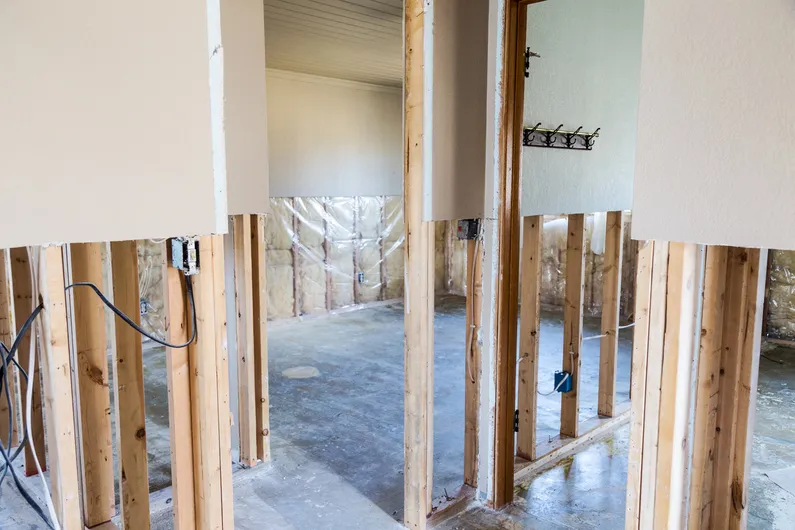
Here’s what most homeowners don’t realize: drying the visible drywall surface means almost nothing if moisture remains trapped in wall cavities. Water runs down the inside of walls, saturating insulation and studs. We often need to make flood cuts-removing the bottom 12-24 inches of drywall-to allow air circulation behind walls where moisture accumulates.
Sometimes we drill small strategic holes to introduce airflow without full removal. Wet insulation almost always requires removal because it holds moisture indefinitely and promotes mold growth. When homeowners attempt DIY drying, they focus on visible surfaces while wall cavities remain saturated. Six weeks later, when they call us for emergency restoration, we’re removing drywall to remediate mold that grew behind walls they thought were dry.
Verification Testing Proves Successful Drying
We take daily moisture meter readings at the same documented locations throughout the drying process. The goal isn’t “looks dry” or “feels dry”-it’s achieving less than 15% moisture content verified by meter readings. For an average water-damaged room in a Fraser home, our professional equipment typically achieves complete drying in 3-5 days.
Homeowners attempting DIY drying with consumer equipment often take 7-14 days, and many never achieve complete drying at all. That time difference matters tremendously because every day of elevated moisture increases mold risk. We don’t remove equipment until readings confirm complete drying at depth, not just surface measurements.
Clear Signs Your Fraser Home Needs Drywall Replacement, Not Drying
Sometimes the dry-or-replace decision is clear-cut. After nearly three decades of restoring properties throughout Macomb County, we’ve learned to recognize the situations where attempting to dry is throwing good money after bad.
Category 3 Water Means Automatic Replacement
Sewage backups, toilet bowl overflows, and flood water that’s contacted soil all qualify as Category 3 water with serious contamination. This water contains bacteria, viruses, and pathogens that penetrate porous materials like drywall. No amount of drying eliminates this contamination-the material itself is compromised.
Michigan health codes require the removal and proper disposal of any porous building material contacted by Category 3 water. We follow these codes without exception because attempting to salvage contaminated drywall creates genuine health hazards for your family. The small savings from avoiding replacement aren’t worth the risk of illness or the liability if someone gets sick.
Extended Exposure Crosses the Mold Threshold
When Fraser homeowners discover water damage more than 72 hours after it occurred, replacement becomes necessary even if the water source was clean. This happens most often with slow leaks that went unnoticed-a pinhole in a pipe inside a wall, a roof leak that dripped into a ceiling cavity, or a toilet supply line that seeps rather than gushes.
The combination of moisture and time allows mold colonies to establish themselves in the paper facing and gypsum core. Even if you don’t see visible mold yet, spore counts in these materials are elevated enough that drying them in place would disperse those spores throughout your home. The longer exposure also degrades the gypsum itself, reducing structural integrity even after drying.
Visible Mold Requires Removal
Any visible mold growth on drywall means that the material needs to be removed as part of mold remediation. Homeowners sometimes suggest bleach cleaning followed by drying, but this approach fails because surface cleaning doesn’t kill mold growing into the paper facing or gypsum core.
Mold sends root structures (hyphae) deep into porous materials where they’re protected from surface treatments. When you attempt to dry mold-contaminated drywall, the air movement from drying equipment disperses mold spores to unaffected areas of your home. Proper mold remediation requires containment barriers and controlled removal before any drying begins.
Structural Compromise Indicates Material Failure
Drywall that sags, bulges, or crumbles has lost its structural integrity. The gypsum core has broken down, the paper facing has delaminated, or both. This material will not return to its original condition even with complete drying. We’ve seen homeowners successfully dry structurally compromised drywall only to find it cracks, crumbles, or sags again once they try to paint or hang anything on it.
Paper facing delamination specifically indicates that the adhesive bond between the paper and gypsum failed. This bond is what gives drywall its strength. Without it, you have brittle gypsum that won’t hold fasteners or accept finishing. Replacement provides a proper substrate for painting and normal use.
Sometimes Replacement Costs Less Than Drying
After 29+ years in Fraser, we’ve seen homeowners try to save drywall that couldn’t be saved. The mold problems that develop 2-3 months later cost 3-4 times more than replacement would have initially. When we assess borderline cases, we consider the total cost of getting it wrong.
Attempting to dry severely damaged drywall requires more equipment, running longer, multiple site visits for monitoring, and a significant risk of callback for mold remediation. Sometimes demolition, disposal, and replacement with new materials costs less overall while providing certainty of outcome. We present both options with transparent pricing so Fraser homeowners can make informed decisions based on their specific situation.
Why DIY Drywall Drying Usually Fails in Fraser Homes
We receive calls weekly from homeowners who attempted DIY water damage drying and discovered mold growth weeks later. These failures follow predictable patterns related to equipment limitations and incomplete moisture removal.
Consumer Equipment Can’t Create Proper Drying Conditions
Box-store dehumidifiers typically remove 30-50 pints of moisture daily compared to 150+ pints for our LGR units. This capacity difference determines whether you can lower ambient humidity enough to pull moisture from saturated materials. Consumer fans move 1,000-1,500 CFM compared to 2,500-3,000 CFM for professional air movers.
These specifications aren’t marketing hype-they’re physics determining drying effectiveness. Inadequate dehumidification leaves humidity elevated in the space, preventing moisture from leaving the drywall. Inadequate air movement creates zones of stagnant air where humidity stays high even when the dehumidifier runs. The result is slow drying that takes so long it crosses the mold growth threshold.
No Moisture Verification Leads to False Confidence
Homeowners judge drying progress by touch, appearance, and smell. The surface of drywall can feel completely dry while the gypsum core remains saturated with 25-30% moisture content. This happens because surface moisture evaporates first while deep moisture moves slowly outward through the dense gypsum.
Without moisture meters taking readings at depth, homeowners conclude drying is complete when it’s barely started. They put furniture back against the walls, repaint, or move on, assuming the problem is solved. Four to eight weeks later, when hidden moisture finally manifests as mold growth, the problem has become significantly more expensive. The call we get at that point isn’t for drying-it’s for mold remediation with drywall removal that could have been prevented.
Incomplete Drying Strategy Ignores Wall Cavities
DIY attempts focus exclusively on visible drywall surfaces because that’s what homeowners can see and access. Meanwhile, water that ran down inside the walls saturates insulation, studs, and the back side of the drywall. Consumer equipment positioned in the room creates some airflow across visible surfaces but does nothing for the moisture trapped in enclosed cavities.
This trapped moisture wicks back into the drywall from behind, continuously re-saturating material that appears to be drying on the front. Without flood cuts or access holes to allow air circulation in cavities, complete drying is impossible, regardless of how long the equipment runs. We’ve opened walls during mold remediation to find completely saturated insulation behind drywall that homeowners insisted felt dry.
Slow Drying Crosses the Mold Growth Threshold
Mold needs moisture, organic material (like paper facing), and time. DIY drying with inadequate equipment provides all three. While homeowners are congratulating themselves for saving money on professional services, mold is establishing colonies in the perfect growth environment they’ve created.
The scenario plays out reliably: homeowners run consumer equipment for 7-10 days, surfaces feel dry, they assume success and pack up the equipment. Moisture remaining in wall cavities and material depth continues supporting mold growth. By the time they notice musty odors or visible mold 4-6 weeks later, remediation costs far exceed what professional drying would have cost initially.
We recently worked with a Fraser homeowner who rented equipment and attempted drying after a basement flood. Six weeks later, they called because black mold covered the basement drywall they thought they’d saved. We removed 400 square feet of drywall, treated wall cavities, and installed new materials-total cost roughly three times what professional drying would have cost if they’d called us immediately after the flood.
Drywall Replacement vs. Drying: What Fraser Homeowners Should Know About Costs
Cost anxiety drives many dry-or-replace decisions, but understanding the complete financial picture helps homeowners make choices that save money long-term rather than creating expensive problems down the road.
Professional Drying Costs Reflect Equipment and Expertise
Professional water damage restoration for a typical 12x15 room with wet drywall generally runs $1,500-3,000 depending on severity and drying time required. This includes industrial equipment delivery and setup, daily monitoring visits, moisture meter documentation, and verification that materials reach safe moisture levels before we remove equipment.
Insurance typically covers these costs when the water damage event falls under your policy. Homeowners pay deductibles, but the full restoration cost is covered if properly documented. Our 29 years of working with insurers serving Fraser means we know exactly what documentation they require-moisture readings, photo evidence, and detailed scope reports.
Replacement Costs Include More Than Just Materials
Full drywall replacement for that same 12x15 room typically runs $2,000-4,000 depending on factors like ceiling height, finish level, and whether we’re replacing sections or entire walls. This includes controlled demolition, proper disposal of contaminated materials, new drywall installation, finishing with joint compound, sanding, and primer.
These costs become comparable to professional drying when extensive damage requires multiple walls or ceilings to be replaced. The difference is that certain replacement guarantees you’re starting with clean, dry materials, while drying attempts carry the risk of incomplete moisture removal. For borderline cases, we provide transparent estimates for both approaches so homeowners understand the cost-benefit tradeoff they’re making.
The Hidden Cost of Getting It Wrong
Attempting to dry when replacement is needed creates the most expensive outcome of all. When homeowners discover mold growth 6-8 weeks after attempted drying, they pay for mold remediation (which requires containment, air scrubbing, and extensive safety protocols), plus drywall replacement plus treatment of affected framing and cavities. This combined cost typically runs 3-5 times what a proper replacement would have cost initially.
Conversely, replacing drywall that could have been dried successfully means paying unnecessary demolition and installation costs. Professional assessment with moisture meters prevents both mistakes by providing objective data for decision-making rather than guesswork. The assessment itself costs a fraction of making the wrong choice.
Insurance Documentation Determines Coverage
Whether you’re drying or replacing, insurance companies require proof that the approach was necessary and appropriate. We provide moisture meter readings showing saturation levels, thermal imaging revealing hidden damage extent, photographs documenting conditions before and during restoration, and detailed reports explaining why we recommended our approach.
This documentation has helped countless Fraser homeowners maximize their insurance coverage while avoiding claim disputes. When adjusters see objective moisture meter data showing 40% saturation at depth with Category 2 water exposure, they understand why replacement was necessary. When they see systematic drying documentation with daily moisture readings, they approve drying costs without question.
How Miracle Property Restoration Assesses Drywall Damage in Fraser Homes
Our assessment process provides the objective data homeowners need to make confident decisions about drying versus replacement, backed by 29+ years of experience throughout Macomb County.
Initial Moisture Detection Uses Professional Technology
Within 60 minutes of your call to (855) 324-2921, our IICRC-certified technicians arrive with thermal imaging cameras and professional moisture meters. The thermal imaging scan reveals the full extent of moisture intrusion-we see cold spots indicating wetness behind walls, in cavities, and under flooring where visual inspection shows nothing.
Moisture meters give us specific percentage readings at different points and depths. We document readings from dozens of locations, taking measurements at the surface, at depth using pin meters, and behind walls using non-penetrating scanners. These readings tell us objectively whether moisture saturation falls within the salvageable range or crosses thresholds requiring replacement.
Water category determination happens during this initial assessment through conversation with the homeowner about the source and contamination history. A supply line break gets classified differently than a sewage backup or flood water intrusion.
Damage Documentation Creates Insurance-Ready Evidence
Every moisture reading gets photographed, showing the meter display next to the wall location being measured. We photograph water stains, visible damage, affected areas, and equipment placement. Our technicians create written moisture maps showing saturation levels throughout the affected area with color coding indicating severity.
This documentation package provides everything your insurance adjuster needs to approve the appropriate restoration scope without delays or disputes. We’ve refined this process over nearly three decades, working with every major insurer serving Fraser and Macomb County residents.
Recommendations Include Supporting Data and Options
After completing the assessment, we explain our dry-or-replace recommendation and show you the objective data supporting it. If moisture readings are borderline, we present both options with transparent cost estimates, timeline expectations, and an honest discussion of success probability. You see the same moisture meter readings we’re using to make our recommendation.
When replacement is clearly necessary-Category 3 water exposure, extensive mold growth, or structural compromise-we explain why attempting to dry would create future problems. When professional drying has a high success probability, we explain the process, the equipment we’ll use, and the monitoring plan. You make informed decisions rather than accepting recommendations based on trust alone.
24/7 Emergency Assessment Matters for Outcomes
The dry-or-replace decision changes hour by hour as water continues damaging materials. A situation at hour 24 where drying would succeed becomes a replacement scenario by hour 72 as mold begins growing. This time sensitivity is why we maintain a 24/7 emergency response with typical arrival times under 60 minutes for Fraser and Macomb County homes.
Every hour of delay increases costs regardless of whether you ultimately dry or replace. Rapid response means assessing damage while conditions still favor less invasive restoration. We provide free moisture inspections for Fraser homeowners specifically because we know early assessment prevents the worst outcomes.
Making the Right Decision for Your Fraser Home’s Water-Damaged Drywall
Water-damaged drywall in Fraser, MI can sometimes be saved through professional drying with proper equipment and monitoring, but specific objective criteria determine when this approach succeeds and when replacement becomes necessary. The four key factors-water category, saturation depth, exposure time, and visible damage-provide measurable thresholds rather than subjective guesswork.
Professional assessment with moisture meters and thermal imaging prevents the two most expensive mistakes: attempting to dry materials that should be replaced, and replacing materials that could have been dried successfully. Both approaches have appropriate applications, but the decision requires data, not assumptions based on how things look or feel.
After 29+ years restoring water-damaged properties throughout Macomb County, we’ve learned that homeowners appreciate honest assessment backed by objective evidence. When we recommend replacement, we show you the moisture meter readings and contamination factors that make drying impossible. When we recommend drying, we explain the equipment and monitoring that ensures success rather than hidden mold development.
Don’t guess about your Fraser home’s water-damaged drywall. Our IICRC-certified technicians provide free moisture assessments with thermal imaging and meter readings-objective data that determines whether drying or replacement saves you money long-term. We’re available 24/7 because emergency water damage can’t wait for business hours. Call (855) 324-2921 now for rapid assessment and honest recommendations — or learn more about our water damage restoration services in Fraser, MI.


