
What Is Construction Restoration? A Michigan Homeowner's Guide to Rebuilding After Property Damage
 Apr 7, 2026
 What Is Construction Restoration? A Michigan Homeowner’s Guide to Rebuilding After Property Damage
The emergency is over. The water has been extracted, the fire is out, or the storm has passed - and now you’re standing in a home that doesn’t look or function the way it did before. What comes next is a phase that most homeowners have never had to navigate: the rebuild. Understanding what construction restoration services actually involve, and how they differ from standard contracting, is the first step toward making smart decisions in an unfamiliar process.
Construction Restoration Isn’t the Same as Standard Construction
A general contractor builds things. A restoration contractor rebuilds things - and that distinction matters more than it sounds.
Construction restoration services operate within a framework that general contractors typically don’t work in. Restoration work has to account for damage sequencing: the order in which repairs happen is determined not just by logic, but by the condition of the materials underneath. You can’t install new drywall over framing that hasn’t been fully dried and cleared. You can’t lay new flooring over a subfloor that still holds moisture from a flood. The build phase depends entirely on the remediation phase being completed correctly first.
Restoration contractors also work within the insurance claims process as a matter of course. They understand how to document scope, write estimates in the formats adjusters use, submit supplements when hidden damage is discovered, and communicate with carriers in ways that keep your claim moving. A general contractor brought in after the fact typically doesn’t have that fluency, which creates gaps in documentation and delays in approval that fall on the homeowner to resolve.
The other difference is certification. The IICRC - the Institute of Inspection Cleaning and Restoration Certification - sets the industry standards that govern professional restoration work. IICRC-certified companies are trained to recognize damage patterns, assess structural risk, and sequence restoration work in ways that prevent secondary problems like mold, odor recurrence, or structural instability. That training doesn’t come with a general contractor’s license.
The Two Phases of Property Disaster Recovery: Mitigation vs. Restoration
Every property damage event involves two distinct phases, and understanding the difference between them helps you ask better questions and make better decisions throughout the process.
Mitigation is the emergency phase. It’s everything that happens in the immediate aftermath of a loss: water extraction, structural drying, fire board-up and tarping, mold containment, hazardous material removal, and decontamination. The goal of mitigation is to stop ongoing damage - to stabilize the property and prevent the situation from getting worse. Water damage restoration, fire and smoke damage restoration, and mold remediation all fall within the mitigation phase. This work is time-sensitive, and doing it correctly is what determines whether the restoration phase goes smoothly or becomes a series of compounding problems.
Construction restoration is what comes after. Once the property has been stabilized, dried, decontaminated, and cleared, the rebuild begins. This is where damaged structural components are repaired or replaced, finished surfaces are restored, and the home is returned to its pre-loss condition. In some cases, reconstruction is relatively minor - replacing drywall in one room, refinishing a floor, or repainting. In others, it involves rebuilding significant portions of the structure, including framing, roofing, electrical, plumbing, and HVAC systems that were damaged or removed during remediation.
These two phases need to be coordinated, not treated as separate projects handed off between different companies. When mitigation and construction restoration services are managed by the same team, the documentation is continuous, the sequencing is controlled, and the transition from drying to rebuilding happens at the right time rather than the wrong one.
What Construction Restoration Actually Covers
Homeowners are often surprised by the breadth of what construction restoration services encompass. It’s not just patching and painting - it’s a comprehensive rebuild process that can touch nearly every system in the home, depending on the scope of the damage.
Structural repairs typically include replacing damaged framing, sheathing, and subfloor assemblies. After a significant water event, floor joists and wall studs that absorbed moisture and weren’t fully dried may need to be replaced rather than retained. After a fire, structural members that were compromised by heat or fire suppression water are assessed and replaced as needed. These repairs have to meet current Michigan building code requirements, which means permitting is often required - particularly for structural work, electrical, and plumbing.
Michigan’s building permit process is a detail that catches many homeowners off guard. Restoration contractors familiar with local jurisdictions - including the municipalities throughout Macomb County - know which scopes of work require permits, how to pull them, and how to schedule inspections so the project doesn’t stall waiting for approvals. A contractor unfamiliar with local requirements can inadvertently create code compliance problems that complicate the final sale of a home years down the road.
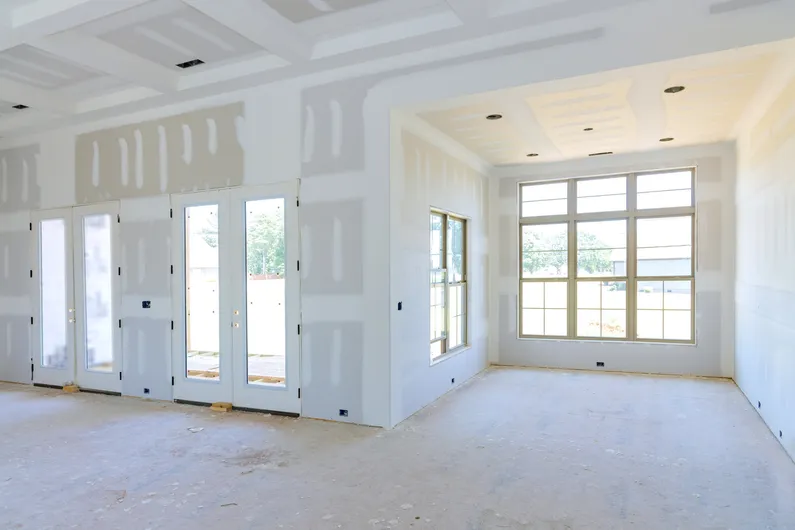
Beyond structural work, construction restoration services cover drywall installation and finishing, insulation replacement, interior painting, flooring installation (hardwood, tile, carpet, and LVP), cabinet and millwork replacement, door and window installation, and fixture replacement. In fire damage situations, restoration also involves the deodorization of structural materials before any finishing work begins - because enclosing smoke odor inside new drywall without proper treatment is one of the most common and costly mistakes in post-fire reconstruction.
Why Working with a Single Restoration Contractor Matters
When mitigation and construction restoration are handled by the same company, a homeowner has one point of contact, one set of documentation, and one contractor who is accountable for the outcome from start to finish. When they’re split between two separate companies, the gaps that open up between them become the homeowner’s problem to manage.
Those gaps show up in several ways. A restoration company that only does mitigation may release the property as “dry and ready” without fully accounting for what the construction contractor will discover when they open walls. A general contractor who comes in after the fact may find damage that wasn’t documented in the original scope - and navigating a supplement with the insurance company at that point, without the mitigation company’s direct involvement, is a significantly harder conversation.
There’s also a sequencing risk. Construction restoration has to begin at the right moment - after the structure is confirmed dry and clear, but not so long after that the open-wall condition creates new problems. A single contractor managing both phases controls that transition and takes responsibility for the timing. Two separate contractors each have an incentive to point to the other when something goes wrong.
How Michigan Homeowners Navigate Insurance During the Rebuild Phase
The insurance claims process doesn’t end when mitigation does. The rebuild phase generates its own documentation requirements, and how well that documentation is assembled directly affects what gets approved and how quickly.
Your insurer will issue an initial estimate for reconstruction based on what was documented during the mitigation phase. That estimate is a starting point, not a final number - particularly in cases where damage was hidden inside walls, under flooring, or above ceilings and wasn’t fully visible until demo work began. When additional damage is uncovered, a restoration contractor submits a supplement to your adjuster. A contractor who does this routinely knows how to support a supplement with the documentation adjusters need to approve it. A contractor who doesn’t work in the insurance space regularly may not.
Understanding your policy’s replacement cost versus actual cash value provisions, your deductible, and what’s covered under your specific loss type is important before construction restoration begins. For a detailed overview of how Michigan homeowners’ insurance works in damage situations, see our resource on working with your insurance company after property damage. The earlier you understand your coverage framework, the fewer surprises you’ll encounter when invoices start coming in.
What to Look for in a Construction Restoration Company in Macomb County
Not every contractor who advertises restoration services has the training, certification, and insurance claims experience to manage a full damage recovery project. When you’re evaluating companies for Macomb County restoration services, a few criteria distinguish legitimate restoration contractors from general contractors simply entering the market after a storm event.
IICRC certification is the baseline. It signals that the company’s technicians have been trained to industry standards for damage assessment, remediation sequencing, and structural drying - not just cleanup and rebuilding. Michigan licensing and full insurance coverage are non-negotiable: any contractor performing structural, electrical, plumbing, or roofing work in Michigan must be properly licensed for those trades.
Experience with the insurance claims process is equally important. Ask directly: Does the company work with insurance carriers and write estimates in Xactimate, the industry-standard estimating platform? Can they explain how they handle supplement documentation? Do they have a designated contact who communicates with your adjuster? A company that can answer those questions fluently has done this before.
Local experience matters in Macomb County specifically. Fraser and the surrounding municipalities have their own inspection and permit processes, and a contractor who has worked in the area for years knows the local building departments, the common construction types in the region, and the inspectors they’ll be working with. That familiarity speeds up the permitting process and reduces the risk of code compliance issues late in the project.
Miracle Property Restoration: From Emergency to Fully Restored
Miracle Property Restoration has provided construction restoration services to homeowners throughout Fraser, Warren, Sterling Heights, Clinton Township, and all of Macomb County for over 29 years. We are IICRC-certified, Michigan licensed, and fully insured - and we manage the full scope of property damage recovery, from the first emergency call through the final walkthrough of a completed rebuild.
Our process is built around the principle that you shouldn’t have to coordinate between multiple contractors during one of the most stressful experiences a homeowner can face. Our mitigation teams and construction crews work under the same roof, share documentation in real time, and transition seamlessly from stabilization to reconstruction at the right moment - not when it’s convenient for a handoff. We communicate directly with your insurance adjuster throughout, keeping your claim on track and your project moving.
If you’re past the emergency phase and trying to understand what comes next, we’d welcome the conversation. Call us at (855) 324-2921, reach out through our contact page, or explore our emergency restoration services in Fraser, MI. There’s no pressure and no obligation - just a straightforward conversation about where your property stands and what a full recovery looks like from here.


