Smoke Damage Restoration in Fraser Homes: Why the Smell Comes Back Without Professional Treatment
 Feb 24, 2026
 What should you know first?
Smoke odor returns because particles penetrate deep into walls and HVAC systems. Learn why professional smoke damage restoration in Fraser, MI is the only real fix.
Why Smoke Odor Returns After Restoration
There’s a pattern our technicians see repeatedly after residential fires in Fraser and across Macomb County. A homeowner scrubs the walls, opens every window, lights candles, and buys every odor-eliminating spray the hardware store carries. For a few days, the house smells okay. Then summer humidity rolls in, or someone runs the furnace for the first time, and the smoke smell comes flooding back - stronger than ever.
This isn’t bad luck. It’s chemistry.
Understanding why smoke odor returns is the key to understanding why professional smoke damage restoration in Fraser homes isn’t just a convenience - it’s the only approach that actually works long-term. Here’s what’s happening inside your walls, and why no candle or cleaning spray will ever reach it.
Smoke Isn’t Just Smell - It’s Millions of Particles
When a fire burns, it doesn’t just produce odor. It generates an aerosol of microscopic combustion particles - soot, tar droplets, and volatile organic compounds (VOCs) - that travel through the air and deposit on every surface they contact. These particles are extraordinarily small, often measuring between 0.1 and 1 micron. For comparison, a human hair is roughly 70 microns wide.
That size matters enormously. Particles that small don’t just sit on the surface of your drywall or settle into your carpet. They penetrate. Drywall is porous. Wood framing absorbs VOCs like a sponge. Insulation in the wall cavity traps soot particles. Fabric, upholstery, and even the finish coat on your cabinets absorb smoke chemistry that no surface wipe-down can reach.
When you clean the visible soot off your walls after a fire, you’re removing maybe the top layer of contamination. The particles already embedded beneath the surface layer, inside the drywall paper, inside the insulation, inside the wood - those don’t move.
Why Heat and Humidity Make the Smell Return
You cleaned the house. Things smelled acceptable for a couple of weeks. Then something changed.
That something is usually temperature or humidity. VOCs and smoke residues trapped in porous materials are volatile - meaning they off-gas back into the air more aggressively when temperatures rise or when moisture is present. The warmth of summer, the first furnace cycle of fall, a humid Michigan spring - all of these conditions cause the residues embedded in your building materials to release back into your living space.
This is why homeowners who handle smoke cleanup themselves consistently report that the smell “comes back.” The smell never actually left. It was dormant in your walls, waiting for conditions to change.
Professional smoke damage restoration in Fraser homes addresses this with a fundamentally different approach - not surface cleaning, but deep penetration and neutralization.
The HVAC System: Smoke’s Highway Through Your Home
One of the most underestimated aspects of smoke damage is how far it travels before a fire is even extinguished. Your HVAC system is running during a fire. It’s pulling air - and everything suspended in that air - through return vents, through ductwork, and circulating it throughout every room in your house.
Rooms that never saw flames often have significant smoke damage. A kitchen fire can deposit soot and odor-causing residue in second-floor bedrooms through the ductwork. The particles settling into your duct lining, filter housing, and air handler aren’t going anywhere on their own.
This is a critical reason why smoke odor returns even when visible surfaces look clean. Every time your HVAC system runs, it pulls air across contaminated ductwork and redistributes smoke chemistry throughout the house. Until the duct system itself is addressed as part of smoke damage restoration, the cycle continues.
Our Fraser restoration teams inspect and treat HVAC systems as a standard component of complete smoke remediation - not an optional add-on.
Three Types of Smoke Residue - And Why They Require Different Approaches
Not all smoke is the same, and treating all soot deposits the same way is a reliable path to incomplete restoration. IICRC training distinguishes between several distinct residue types, each with different chemical properties and cleaning requirements.
Dry smoke residue results from fast-burning, high-temperature fires involving paper or wood. It produces a dry, powdery soot that can sometimes be vacuumed away without smearing - but only if the right technique is used. Standard cleaning often grinds it deeper into surfaces.
Wet smoke residue comes from slow-burning, low-heat fires, often involving rubber or plastics. It creates a thick, sticky, pungent deposit that smears badly when disturbed and penetrates deeply into porous surfaces. This is among the most difficult residue types to address and requires specific chemical agents and controlled application.
Protein residue is invisible. It comes from cooking fires - burning food or grease - and leaves almost no visible soot while depositing an incredibly stubborn odor compound. Homeowners often believe their kitchen fire left no real damage because they can’t see anything. Then the smell lingers for months. Protein residue requires enzymatic cleaners and specific protocols that don’t exist in consumer products.
Misidentifying the residue type and applying the wrong cleaning approach doesn’t just fail to solve the problem - it can permanently bond the residue to surfaces, making professional remediation harder and more expensive. Proper assessment is the foundation of effective smoke damage restoration.
Why Odor Masking Doesn’t Work
The instinct after a fire is to get rid of the smell as quickly as possible. Air fresheners, scented candles, baking soda, vinegar - homeowners try everything. Some of these approaches have a limited short-term effect. None of them work long-term, and here’s why.
Masking agents don’t neutralize smoke odor compounds. They add a competing smell. Once the masking scent fades, the smoke chemistry that was always there reasserts itself. Worse, many commercial odor sprays contain moisture, which can actually reactivate dormant smoke residues embedded in your building materials.
Professional smoke odor removal works through actual molecular neutralization - changing the chemical structure of the odor-causing compounds so they no longer off-gas into your living space.
The primary tools for this are thermal fogging and hydroxyl generators.
Thermal fogging uses heated solvent-based or water-based deodorizing agents dispersed as a fine fog that penetrates the same porous materials that smoke penetrated. It follows the same pathways smoke used to get in - and neutralizes the residues where they live, not just on the surface. Hydroxyl generators produce hydroxyl radicals that break down VOCs at the molecular level and are safe for occupied structures. Neither of these technologies is available at retail. Both require trained operators to use safely and effectively.
This is the fundamental gap between DIY smoke cleanup and professional smoke damage restoration in Fraser homes. It’s not effort - homeowners who try to handle this themselves often work incredibly hard. It’s access to the right chemistry and equipment.
The Timeline Problem: Why Waiting Makes It Worse
Smoke residue begins bonding to surfaces within hours of a fire. The longer soot and acidic combustion byproducts sit on walls, wood, metal fixtures, and fabrics, the more permanently they adhere. Metals begin to corrode. Porous surfaces absorb residue deeper. Restoration costs increase.
In the first 24-48 hours after a fire, professional smoke damage restoration can often save materials that would otherwise need full replacement. After a week, many of those same materials become unrestorable. The economics of fast professional response versus delayed DIY attempts almost always favor calling restoration professionals immediately - even before insurance adjusters arrive.
Our emergency restoration team in Fraser responds 24/7 and can begin smoke damage documentation and initial treatment the same day you call.
What Professional Smoke Damage Restoration Actually Looks Like
When Miracle Property Restoration responds to a fire-damaged Fraser home, smoke restoration follows a structured, IICRC-standard process - not a cleaning crew with mops and spray bottles.
It starts with a complete assessment. We use thermal imaging and air quality monitoring to identify the full extent of smoke migration, including areas with no visible damage. This documentation serves two purposes: it guides our restoration work, and it builds the insurance claim record that ensures you receive full coverage for the actual scope of damage.
From there, the process moves through structured containment, surface cleaning with residue-specific chemical agents, HVAC system treatment, thermal fogging or hydroxyl generator treatment for deep odor neutralization, and air quality verification testing to confirm restoration is complete - not just cosmetically acceptable.
Throughout the process, we provide detailed documentation for your insurance company. Fire damage restoration is among the most documentation-intensive claims homeowners face, and having a professional restoration company managing that process significantly reduces the risk of underpayment.
Smoke Damage Isn’t Limited to the Fire Room
If there’s one thing Fraser homeowners consistently underestimate after a fire, it’s the geographic scope of the damage. Smoke moves. It follows air pressure differentials, travels through wall penetrations, migrates through HVAC systems, and settles in materials throughout the entire structure.
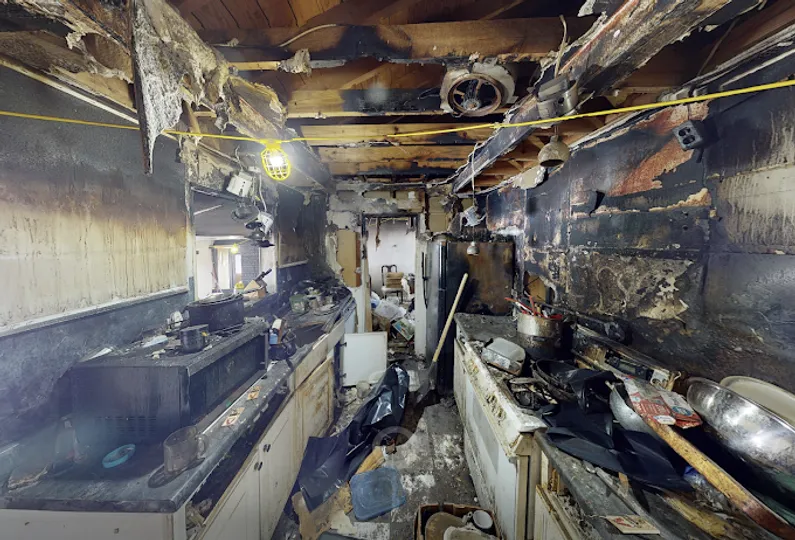
We regularly document significant smoke and soot damage in rooms three or four doors from the fire origin - rooms that look clean to the untrained eye but fail air quality testing. Treating only the visible damage and leaving the rest unaddressed is a reliable way to end up with a lingering odor that no amount of cleaning will resolve.
Complete smoke damage restoration in Fraser homes means assessing the entire structure, not just the obvious areas. That requires equipment and methodology that go well beyond what any homeowner-driven cleanup can accomplish.
Why Macomb County Homeowners Trust Miracle Property Restoration
Miracle Property Restoration has served Fraser and Macomb County for over 29 years. Our IICRC-certified technicians have responded to hundreds of residential fire and smoke damage events throughout the region - kitchen fires, structure fires, electrical fires, and everything in between.
We carry the professional-grade thermal fogging equipment, hydroxyl generators, commercial HEPA air scrubbers, and residue-specific chemical agents that complete smoke restoration requires. We handle documentation and work directly with your insurance carrier. And we respond 24/7, because the timeline for smoke damage restoration matters.
If the smell has come back after a fire - or if you’re facing fire and smoke damage right now - the solution isn’t another bottle of odor spray. It’s a professional restoration that reaches where the smoke actually went.
Call Miracle Property Restoration at (855) 324-2921 for 24/7 emergency response and smoke damage assessment throughout Fraser, Warren, Sterling Heights, Clinton Township, and all of Macomb County.
Contact us online or learn more about our fire damage restoration services in Fraser.
Frequently Asked Questions
What does this smoke damage restoration in fraser homes: why the smell comes back without professional treatment guide explain?
Smoke odor returns because particles penetrate deep into walls and HVAC systems. Learn why professional smoke damage restoration in Fraser, MI is the only real fix.
When should a property owner contact a restoration professional?
Contact a qualified restoration professional when damage is active, hidden moisture may remain, regulated materials could be present, or the loss affects structural materials, indoor air quality, electrical systems, or normal building operations. Prompt assessment helps define safe next steps and limits avoidable secondary damage.
How does Miracle Property Restoration support a damage recovery project?
Miracle Property Restoration provides emergency stabilization, documentation, mitigation, remediation, and reconstruction for commercial and residential properties across Southeast Michigan. The team develops a property-specific scope, records conditions and progress, coordinates with project stakeholders, and restores affected areas after the immediate hazard is controlled.


