
Soot vs. Smoke: What's Actually Damaging Your Home After a Fire
 May 5, 2026
 What should you know first?
Soot and smoke damage your home in different ways and require different treatments. Here's what Macomb County homeowners need to know after a fire.
How Soot and Smoke Damage a Property
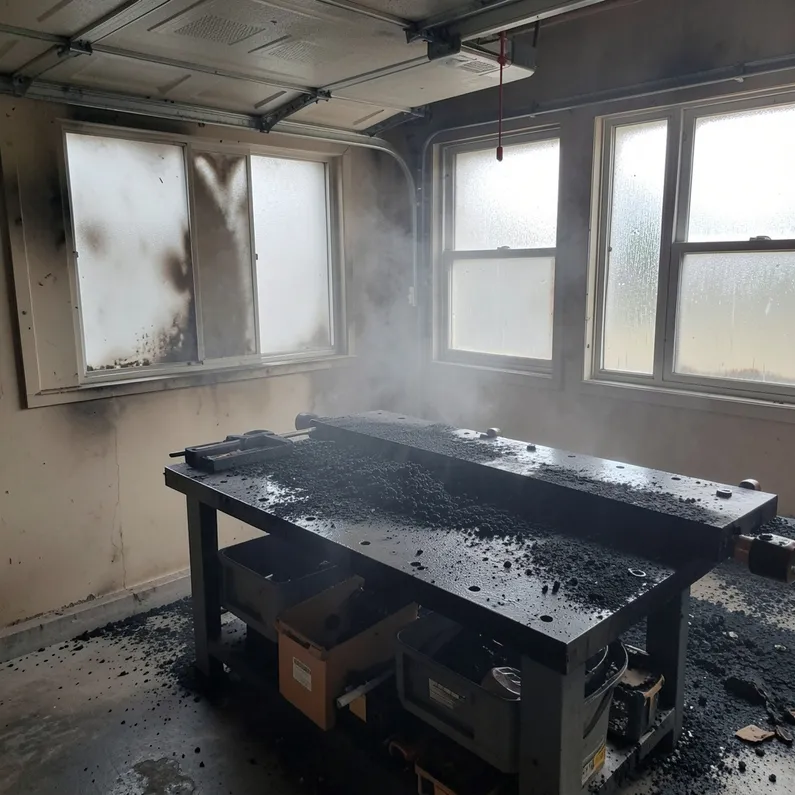
Most homeowners who have been through a fire use the words “smoke damage” and “soot damage” interchangeably, and it’s easy to understand why. From where you’re standing in a fire-affected room, it all looks the same: dark residue on the walls, an acrid smell in the air, surfaces that feel greasy or gritty to the touch. But smoke and soot are chemically distinct; they damage your home through different mechanisms, and they require different treatments. Understanding the difference is what separates a cleanup that actually works from one that leaves problems behind.
They’re Not the Same Thing
Soot is the solid particulate matter produced by incomplete combustion. It consists of carbon particles, unburned fuel residue, and a mix of chemicals depending on what burned: plastics, synthetics, wood, and treated materials each produce soot with different chemical compositions. Soot deposits on surfaces physically, and its consistency ranges from fine and powdery to thick and oily, depending on the fire’s characteristics.
Smoke is the gaseous byproduct of combustion. It carries soot particles suspended in it, but it also contains volatile organic compounds, carbon monoxide, formaldehyde, acrolein, and dozens of other chemical compounds that don’t settle onto surfaces the way soot does. Instead, smoke penetrates porous materials, bonds chemically with fibers, and travels through the structure via air pressure differentials. Smoke reaches places where soot never lands.
Both cause real, lasting damage. But they do it differently, and treating only the visible soot while ignoring the gaseous smoke penetration is one of the most common reasons homeowners end up with a persistent odor long after a fire appears to have been cleaned up.
The Four Types of Soot and Why Each Needs Different Treatment
Not all soot is alike, and the type of soot present in your home after a fire depends on what burned and how. The IICRC’s S700 Standard for Professional Fire and Smoke Damage Restoration recognizes distinct residue types that each require specific cleaning methods.
Dry soot results from fast-burning, high-oxygen fires, typically involving paper, wood, and natural fibers. It’s light, powdery, and often described as looking like fine black dust. Because it hasn’t bonded deeply to surfaces, it can be removed effectively with dry cleaning methods like HEPA vacuuming and chemical sponges, but only if those methods are applied before moisture is introduced. Wiping dry soot with a wet cloth smears it into porous surfaces and makes it exponentially harder to remove.
Wet soot comes from slow-burning, low-oxygen fires involving plastics, rubber, and synthetic materials. It’s thick, sticky, and has a strong odor. Wet soot adheres aggressively to surfaces and doesn’t respond to dry cleaning methods. It requires wet cleaning with specialized chemical agents matched to the specific residue. Because it smears easily, wet soot is one of the most difficult types of smoke and soot damage to clean without professional training and proper supplies.
Protein residue is produced by cooking fires and is almost invisible to the naked eye, which is exactly what makes it so problematic. It doesn’t leave the dark staining people associate with fire damage. Instead, it bonds to surfaces as a thin, nearly transparent film that carries an overwhelming odor. Homeowners who have had a kitchen fire and treated the cleanup themselves often report that the smell only gets worse over time. Protein residue requires enzyme-based cleaning agents specifically formulated to break down organic compounds.
Fuel oil soot is the result of furnace puff-backs, an event specific to oil-fired heating systems where a delayed ignition causes a small explosion inside the combustion chamber and blows oily soot throughout the duct system and into every room of the house. Fuel oil soot is extremely fine, travels farther than any other residue type, and contains petroleum compounds that bond stubbornly to surfaces. A puff-back can deposit smoke and soot damage throughout a home that had no visible fire whatsoever.
What Smoke Does That Soot Doesn’t
While soot deposits on surfaces, smoke penetrates them. The gaseous compounds in smoke are small enough to pass through drywall, absorb into wood framing, saturate insulation, and bond with the fibers of every soft material in the home: upholstery, carpet, clothing, mattresses, and curtains. This is why a house that was thoroughly cleaned of visible soot can still smell strongly of fire weeks later.
Smoke also travels through pressure differentials in ways that soot cannot. When a fire burns in one room, the heat creates pressure that pushes smoke into adjacent spaces, through wall penetrations, around electrical outlets, and into HVAC systems. Once smoke enters the ductwork, every time the system runs it distributes smoke compounds throughout rooms that may have had no visible fire or soot involvement. This is one of the most underestimated sources of persistent odor after a fire.
The EPA has documented that combustion byproducts include dozens of chemicals that are harmful to indoor air quality, several of which adsorb strongly to building materials. “Adsorption” is distinct from absorption: the compounds bond to the surface of materials at a molecular level rather than simply soaking in. That molecular bond is what makes the smoke odor so persistent and why surface-level cleaning doesn’t eliminate it.
Why DIY Cleaning Makes Both Worse
Understanding how soot and smoke behave explains why the most common household responses to fire damage tend to compound the problem rather than resolve it.
Wiping soot with paper towels or damp cloths smears it deeper into porous surfaces and can permanently stain materials that could have been cleaned with proper dry methods. Vacuuming with a standard household vacuum re-aerosolizes fine soot particles, spreading them to surfaces that weren’t previously affected. Repainting over soot without thorough cleaning first results in the odor and staining bleeding through the new paint within weeks. Running the HVAC system to ventilate the home distributes smoke compounds throughout unaffected areas via the ductwork.
Each of these actions turns a contained smoke and soot damage situation into a more widespread one. The sequence matters: assessment before cleaning, dry methods before wet methods, containment before treatment. That sequence is built into IICRC restoration protocols and is not intuitive without training.
If you’re dealing with smoke and soot damage in Fraser or Macomb County, call Miracle Property Restoration at (855) 324-2921 before you attempt any cleaning. We’re available 24/7, and a call now prevents the kind of well-intentioned DIY cleanup that makes professional restoration harder and more expensive.
How Professional Smoke and Soot Damage Restoration Works
Professional restoration begins with a thorough assessment that identifies which residue types are present, where smoke has traveled, and what materials are affected. Because different residues require different cleaning agents, this assessment drives the entire treatment plan. A restoration company that applies a single cleaning method to all surfaces without this differentiation is working against the chemistry of what it’s trying to remove.
Dry cleaning comes first for dry soot residues. HEPA vacuuming with professional-grade equipment removes loose particulate without smearing. Chemical sponges, which are dry rubber sponges that lift soot through mechanical adhesion, treat walls, ceilings, and hard surfaces before any moisture is introduced. This sequencing is critical.
Wet cleaning follows for wet and oily residues, using chemical agents matched to the specific residue type. Protein residues require enzyme-based treatments. Fuel oil soot requires petroleum-specific cleaning chemistry. The right agent applied to the wrong residue type either fails to remove it or damages the surface being treated.
Deodorization is a separate phase that specifically addresses the gaseous smoke compounds that have bonded with structural materials. Thermal fogging uses a solvent-based fog that penetrates the same surfaces that smoke penetrated, chemically neutralizing odor compounds at the molecular level. Hydroxyl generators produce hydroxyl radicals that break apart smoke compounds in the air and on surfaces. These are not air fresheners: they address the source of the odor rather than masking it. For a full overview of what this process looks like from start to finish, visit our fire and smoke damage restoration service page.
HVAC system cleaning is a component of smoke and soot damage restoration that’s easy to overlook. Ducts, air handlers, and registers that have soot deposits or smoke infiltration will continue recirculating odor and particulate every time the system operates. Professional duct cleaning as part of the restoration scope addresses this and prevents a home that has been thoroughly cleaned from smelling like a fire every time the heat or air conditioning runs.
The Hidden Places Soot and Smoke Travel After a Fire
Experienced restoration technicians know where to look for smoke and soot damage beyond the obvious fire-affected rooms. Electrical outlets and switch plates are penetrations in the wall cavity through which smoke travels readily. Attic spaces receive smoke through ceiling light fixtures and recessed lighting, which are direct pathways from the living space above. Crawl spaces and basement areas below a fire-affected floor receive smoke through floor penetrations.
Inside wall cavities, smoke deposits on insulation and framing that no amount of surface cleaning will reach. Thermal imaging and moisture equipment help identify these areas, but experienced technicians also know from the pattern of a fire’s travel where to check even when thermal imaging shows nothing definitive.
The NFPA documents that the majority of residential fire deaths occur from smoke inhalation rather than direct flame contact, which speaks to how effectively smoke travels and concentrates. That same mobility is what makes thorough smoke and soot damage restoration a whole-structure process, not a room-by-room one.
What This Means for Your Insurance Claim
From an insurance standpoint, the distinction between soot and smoke damage matters for scope documentation. An adjuster looking at a fire-damaged home may see soot on the walls of two rooms and write an estimate that covers cleaning and repainting those surfaces. What the estimate may not account for is the smoke penetration in adjacent rooms, the HVAC system, and the structural materials inside walls that sustained no visible soot deposit but significant smoke infiltration.
A restoration contractor who understands the chemistry of smoke and soot damage can document that hidden scope, support it with measurements and professional assessment, and present a supplement to the adjuster that reflects the true cost of returning the home to pre-loss condition. That documentation process is part of what Miracle Property Restoration provides as part of every fire damage restoration in Fraser and fire damage restoration in Macomb County project.
Frequently Asked Questions
Can I clean soot myself before calling a restoration company?
It’s better to wait. The type of soot present determines the correct cleaning method, and applying the wrong method can permanently set staining or push residue deeper into porous surfaces. If you need to re-enter the space before a restoration company arrives, limit contact with affected surfaces and avoid running the HVAC system.
Does smoke damage always cause a persistent odor?
Not always, and the outcome depends heavily on how quickly professional treatment begins and how thoroughly smoke penetration into structural materials is addressed. Smoke and soot damage that is treated within the first 24 to 48 hours with the correct methods and equipment has a significantly better odor outcome than damage that sits for days before treatment begins or that is treated with surface-only methods.
What if only one room had the fire? Do the other rooms need restoration?
Potentially, yes. Smoke travels through the entire structure via air movement, HVAC systems, and wall penetrations. A fire contained to one room can deposit smoke compounds throughout a house, particularly in soft materials and duct systems. A thorough assessment after any fire should cover the full structure, not just the room where the fire occurred.
Smoke and soot damage is more technically complex than it looks. If you’ve had a fire anywhere in Fraser or Macomb County, call Miracle Property Restoration at (855) 324-2921. Our IICRC-certified technicians assess the full scope of what smoke and soot have actually done to your home and treat each residue type with the method that works. We’re available 24/7 and respond fast.
Frequently Asked Questions
What does this soot vs. smoke: what's actually damaging your home after a fire guide explain?
Soot and smoke damage your home in different ways and require different treatments. Here's what Macomb County homeowners need to know after a fire.
When should a property owner contact a restoration professional?
Contact a qualified restoration professional when damage is active, hidden moisture may remain, regulated materials could be present, or the loss affects structural materials, indoor air quality, electrical systems, or normal building operations. Prompt assessment helps define safe next steps and limits avoidable secondary damage.
How does Miracle Property Restoration support a damage recovery project?
Miracle Property Restoration provides emergency stabilization, documentation, mitigation, remediation, and reconstruction for commercial and residential properties across Southeast Michigan. The team develops a property-specific scope, records conditions and progress, coordinates with project stakeholders, and restores affected areas after the immediate hazard is controlled.


