Commercial Water Damage Restoration: What Macomb County Business Owners Need to Know
 Apr 20, 2026
 What should you know first?
Commercial water damage moves fast and costs more than most owners expect. Here's what Macomb County business owners need to know before calling a contractor.
Water damage in a commercial building is not a larger version of a residential problem. It is a categorically different event - one that carries operational, legal, and financial consequences that most property owners don’t fully account for until they’re in the middle of it. If you manage or own commercial property in Macomb County, understanding what commercial water damage restoration actually involves can mean the difference between a controlled recovery and a months-long ordeal.
Why Commercial Water Damage Is a Different Problem Entirely
Residential water damage restoration follows a relatively predictable path: extract standing water, dry the structure, assess for secondary damage, and rebuild. Commercial water damage restoration involves all of that - plus a layer of complexity that most residential-focused contractors are simply not equipped to handle.
Commercial buildings carry higher moisture loads by design. Larger square footage, multi-zone HVAC systems, complex plumbing runs, and concrete or steel construction all change how water moves through a structure and how long it takes to dry. Industrial drying equipment, moisture mapping across multiple floors, and coordinated crews are standard requirements on a commercial job - not optional upgrades.
Multi-tenant properties add another dimension entirely. When water damage affects shared spaces, neighboring units, or common areas, property managers face notification obligations, potential liability claims from tenants, and the need to document cause and scope in a way that protects the ownership entity. A contractor who has only worked residential jobs won’t know how to structure that documentation.
Common Causes of Water Damage in Commercial Buildings
Pipe failures are the most common culprit - burst supply lines, failed sprinkler heads, and deteriorating drain lines account for a significant share of commercial water losses in Southeast Michigan. Aging infrastructure in Macomb County’s older commercial corridors makes this a persistent risk, particularly during hard freezes.
Roof failures are close behind. Flat or low-slope commercial roofs are especially vulnerable to standing water and membrane deterioration. A roof breach during a Michigan winter storm can introduce thousands of gallons of water before it’s detected, especially in warehouses or large retail spaces where ceiling cavities are deep, and damage can spread unseen.
HVAC-related moisture intrusion - condensation, drain pan overflows, and duct leaks - is often the slowest and most damaging cause because it goes undetected the longest. By the time visible signs appear, secondary damage is already underway.
The Hidden Costs: Business Interruption, Inventory, and Liability
The visible damage is only part of the financial exposure. For most commercial property owners and managers, the higher cost is what happens while the building is unusable or operating at reduced capacity.
Every day of business interruption has a direct revenue impact - on your tenants, on your own operations, or both. Expedited commercial water damage restoration isn’t just about quality; it’s about compressing that timeline as aggressively as the scope of damage allows. A contractor who understands this will mobilize accordingly. One who doesn’t will treat your commercial job like a large residential one and sequence the work on a residential timeline.
Server rooms and data infrastructure represent a total-loss risk that doesn’t exist in homes. A water intrusion event near active servers or electrical panels can destroy hardware, corrupt data, and trigger its own chain of liability. Specialized containment and priority sequencing around these spaces requires a contractor who has managed them before.
Inventory loss in warehouse or retail environments can exceed the structural damage costs on a per-square-foot basis. Documentation of affected inventory - what was present, what was damaged, and what was salvageable - is part of the commercial restoration contractor’s scope, not just the adjuster’s job.
What the Commercial Water Damage Restoration Process Actually Looks Like
Commercial water damage restoration follows a defined sequence, though the specifics vary by building type, damage category, and scope. At Miracle Property Restoration, our commercial projects typically move through these phases:
The priority is emergency water extraction and containment. Our team deploys commercial-grade truck-mounted extractors and portable units to remove standing water as quickly as possible, while establishing containment to prevent spread to unaffected areas. Our 24/7 emergency restoration response means we can mobilize day or night - because water doesn’t wait for business hours.
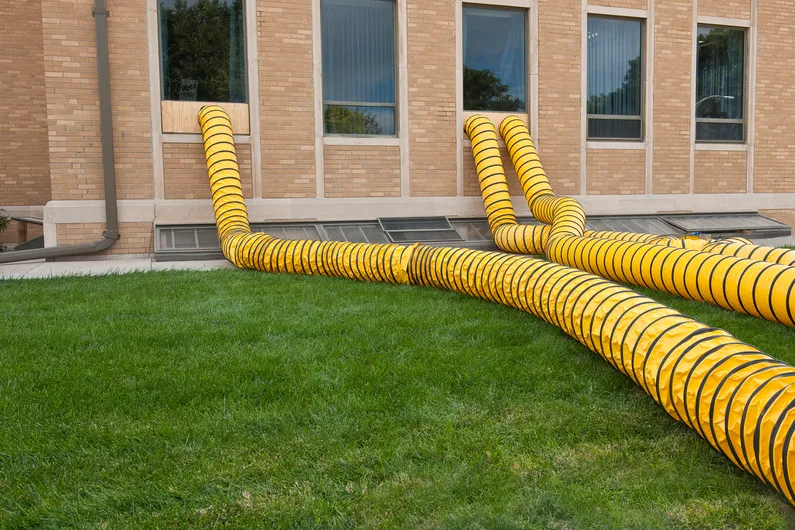
Structural drying follows immediately. Commercial drying requires significantly more equipment than residential work - industrial air movers, desiccant dehumidifiers, and, in some cases, temporary climate control for large open spaces. IICRC standards govern drying protocols, and our technicians use psychrometric data and thermal imaging to verify that drywall, concrete, and structural assemblies reach target moisture levels before any rebuild work begins.
Moisture mapping and documentation run parallel to drying. We produce detailed moisture readings across the affected area, photograph conditions at each phase, and generate the scope-of-loss documentation your insurance carrier will require. This is where commercial claims diverge most sharply from residential ones - the paperwork burden is substantial, and gaps in documentation can complicate or delay claim resolution.
Once the structure is verified dry, rebuild work begins. For commercial properties, this includes code-compliant reconstruction, coordination with building inspectors, and any specialized work required by the occupancy type.
ADA Compliance and Code Requirements During Commercial Rebuilds
This is where many commercial property owners encounter unexpected costs - particularly if their contractor hasn’t handled commercial rebuilds before. When water damage triggers reconstruction of restrooms, corridors, entrances, or other regulated spaces, the Michigan building code may require that the rebuilt areas meet current ADA accessibility standards, even if the original construction predates those requirements.
A contractor who only works residential jobs will price and scope a rebuild based on like-for-like replacement. A commercial restoration contractor accounts for current code requirements from the start, which affects material selection, spatial layouts, fixture specifications, and permitting timelines. Discovering mid-project that a bathroom rebuild requires reconfiguration to meet ADA clearance requirements is the kind of surprise that adds weeks and high cost to a recovery.
Michigan’s building permit requirements for commercial reconstruction are also more involved than residential. Our team manages the permitting process as part of the project, coordinating with local inspectors so your timeline doesn’t stall waiting on approvals.
Working With Your Insurance Carrier on a Commercial Claim
Commercial property insurance claims are more documentation-intensive than residential claims, and the adjuster’s interests and yours don’t always align naturally. Understanding that dynamic - and working with a contractor who understands it - matters.
From the first day on site, Miracle’s team documents conditions, moisture readings, affected materials, and the scope of damage in a format that supports your claim. For a detailed look at navigating a water damage insurance claim in Michigan, we’ve covered the key steps and common pitfalls property owners face.
On commercial claims specifically, the scope-of-loss report is the central document. It itemizes every affected component, the restoration method required, and the material and labor cost for each line item. Adjusters use this document to evaluate the claim. A well-constructed scope report - produced by a contractor who understands commercial construction costs and code requirements - supports a faster, more accurate settlement.
Supplementing claims is also common on commercial losses. Initial adjuster assessments sometimes miss hidden damage, code upgrade requirements, or the full extent of moisture intrusion. We work with property owners and their public adjusters when needed to ensure the final scope reflects actual conditions.
What to Look for in a Commercial Water Damage Contractor
Not every restoration company that handles residential work is equipped for commercial. When evaluating contractors for a commercial water damage restoration project in Macomb County, the questions that matter most are practical ones.
Ask whether the contractor holds a current IICRC certification. The IICRC sets the industry standard for water damage restoration protocols, and certification indicates the technicians working on your building have been trained to those standards - not just the owner who sold the job. At Miracle, every technician operating on a commercial project is IICRC-certified.
Ask about the commercial project history specifically. A contractor who can describe multi-tenant projects, large-footprint drying jobs, and commercial insurance claim documentation in concrete terms has actually done the work. Vague references to experience aren’t enough when you’re managing a commercial property loss.
Verify Michigan licensing and insurance coverage. Commercial restoration work requires Michigan contractor licensing, and the insurance limits appropriate for commercial projects are higher than what a residential-only operation typically carries. Miracle Property Restoration is fully licensed and insured for commercial work throughout Southeast Michigan.
Ask about equipment capacity. Commercial drying requires more equipment than residential jobs - not just more of the same equipment. Contractors who primarily work residential may not have the industrial desiccant dehumidifiers or large-format air movers that a commercial job demands, which extends your drying timeline and your business interruption exposure.
Finally, ask about their process for moisture documentation and insurance coordination. If the answer is vague, that’s a signal. Commercial claims require detailed documentation from day one, and a contractor who doesn’t have a clear process for producing it will create problems for your claim down the line. When secondary issues like mold remediation become necessary - as they often do when moisture isn’t fully eliminated - you want a contractor who has already documented the original conditions thoroughly.
Miracle Property Restoration: Commercial Restoration Across Macomb County
Miracle Property Restoration has been handling commercial and residential water damage restoration in Macomb County and Southeast Michigan for 29 years. Our Fraser, MI headquarters puts us within fast response distance of commercial properties throughout the county - from Clinton Township and Sterling Heights to Warren, St. Clair Shores, and Mount Clemens.
Our commercial water damage restoration work covers the full project lifecycle: emergency response, extraction, structural drying, moisture documentation, insurance coordination, code-compliant reconstruction, and final inspection. We don’t hand off commercial jobs to subcontractors at the rebuild phase - our team carries the project through completion.
If you’re currently dealing with water damage in a commercial property, call us at (855) 324-2921. We respond 24 hours a day, seven days a week, and we can have a team on site fast.
If you’re a property manager who wants to establish a restoration vendor relationship before an incident occurs, we offer free assessments and can document pre-loss conditions that support faster claim processing if damage does occur. That kind of preparation costs nothing and can significantly reduce your recovery timeline when it matters.
Reach us anytime at (855) 324-2921, through our contact page, or learn more about our water damage restoration services in Fraser, MI.
Frequently Asked Questions
What does this commercial water damage restoration: what macomb county business owners need to know guide explain?
Commercial water damage moves fast and costs more than most owners expect. Here's what Macomb County business owners need to know before calling a contractor.
When should a property owner contact a restoration professional?
Contact a qualified restoration professional when damage is active, hidden moisture may remain, regulated materials could be present, or the loss affects structural materials, indoor air quality, electrical systems, or normal building operations. Prompt assessment helps define safe next steps and limits avoidable secondary damage.
How does Miracle Property Restoration support a damage recovery project?
Miracle Property Restoration provides emergency stabilization, documentation, mitigation, remediation, and reconstruction for commercial and residential properties across Southeast Michigan. The team develops a property-specific scope, records conditions and progress, coordinates with project stakeholders, and restores affected areas after the immediate hazard is controlled.


